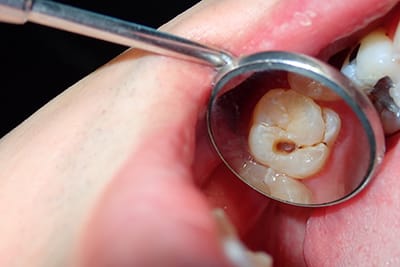

Recent research has linked the presence of tooth decay bacteria to Parkinson's disease. Streptococcus mutans is the bacterium responsible for cavities and tooth decay, and researchers recently discovered that those with Parkinson’s disease have much higher levels of the bacteria present in their stomachs than those without the disease.
This finding reinforces the importance of good oral hygiene and its relevance to good physical health. Currently, Parkinson's affects as many as two percent of those over 65 years of age. The results from the study have highlighted the correlation between the gut biome and the onset of diseases such as Parkinson's, opening new pathways to explore the impact of targeting the gut microbiome in preventing the onset of these deleterious diseases.
Professor Ara Koh, Professor Yunjonh Lee, and doctoral candidates Hyunji Park and Jiwon Cheon, with collaboration by Professor Han-Joon Kim of Seoul National University, led the research team. Their research found that the S. mutans bacteria produced urocanate reductase (UrdA) and a metabolite imidazole propionate (ImP), and both occurred at significantly higher levels in the blood and gut of those who had Parkinson's.
Studies were conducted on mice to introduce S. mutans into the gut to express UrdA. Researchers observed ImP entering the bloodstream and traveling to the brain where it contributed to the loss of dopaminergic neurons, which are the brain cells that make dopamine. Dopamine is essential for movement control.
One of the classic signs of Parkinson’s is the loss of domaminergic neurons and the resulting impaired movement. In the studies, the mice developed elevated levels of ImP in their blood and brain tissue, classic indicators of Parkinson's disease, along with increased inflammation and a build up of alpha-synuclein, which is a protein prevalent in those with Parkinson's.
Further research proved these symptoms depended on the activation of a protein complex called mTORC1. Mice treated with an mTORC1 inhibitor had significantly lower levels of inflammation, movement problems, neuron loss, and alpha-synuclein buildup.
The results of this research reinforce the importance of good oral hygiene not only for maintaining good oral health, but for maintaining good physical health, longevity, and cognitive function.